
La Autoridad Europea contra el Blanqueo de Capitales (AMLA) ya está operativa en Fráncfort. El Código Único se aplica desde el 10 de julio de 2027 y la supervisión directa de 40 entidades de alto riesgo comienza en 2028 - la ventana de preparación está abierta.
Mandato y calendario de la AMLA
La Autoridad contra el Blanqueo de Capitales y la Financiación del Terrorismo (AMLA) fue creada bajo el Reglamento (UE) 2024/1620. Desde 2026, la AMLA ha asumido la responsabilidad de preparar la regulación AML/CFT en toda la UE, incluidos proyectos de Normas Técnicas Reglamentarias y Normas Técnicas de Implementación. A partir de 2028, la AMLA supervisará directamente a 40 de las entidades financieras o grupos de mayor riesgo y complejidad de la UE.
El Código Único se aplica desde julio de 2027
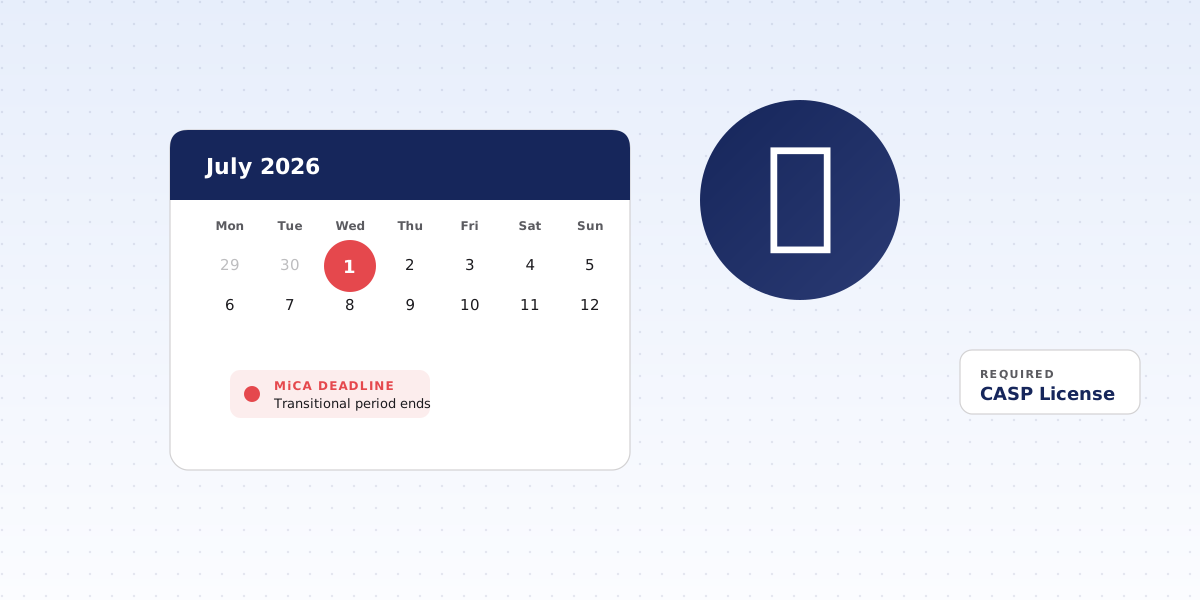
El Reglamento AML de la UE - el núcleo del Código Único - se aplica desde el 10 de julio de 2027 (con fecha posterior del 10 de julio de 2029 para determinadas categorías de entidades obligadas). El reglamento sustituye cinco directivas anteriores sobre blanqueo de capitales y armoniza las obligaciones del sector privado en todo el bloque, poniendo fin a las interpretaciones nacionales fragmentadas que anteriormente caracterizaban el AML en la UE.
Qué cambia para las entidades obligadas
El ámbito se amplía notablemente: proveedores de servicios de criptoactivos, clubes de fútbol profesional y sus agentes, y más comerciantes de bienes de lujo pasan a estar cubiertos. Se aplica un nuevo límite comunitario a los pagos en efectivo. Las definiciones de Persona Políticamente Expuesta (PEP) se amplían para incluir a funcionarios subnacionales y directivos de empresas públicas. Las normas de diligencia debida sobre el cliente se armonizan y el intercambio de información entre las Unidades de Inteligencia Financiera pasa a contar con infraestructura centralizada.
Por qué importa la ventana de preparación
Julio de 2027 puede parecer lejano, pero la escala del cambio - saneamiento de datos, actualizaciones de sistemas, revisiones de gobernanza - hace que los programas iniciados ahora estén bien alineados en el tiempo. El programa de trabajo de la AMLA para 2026 publica consultas sobre diligencia debida sobre el cliente, evaluaciones de riesgo y metodologías de aplicación. Se anima a las entidades obligadas a participar en las consultas para influir en los detalles operativos.
Qué deben hacer ahora las entidades financieras
Mapear los programas AML actuales frente al Código Único propuesto para identificar brechas en las definiciones de PEP, la documentación CDD y la calidad de los datos de titularidad real. Las entidades transfronterizas deben anticipar los criterios de selección para supervisión directa de la AMLA. Las pilas tecnológicas deben evaluarse en cuanto al nivel de reportes armonizados y listos para auditoría que la AMLA esperará.
Cómo ayuda UMCA
La plataforma AML de UMCA ofrece el perfilado armonizado de riesgo del cliente, la monitorización de transacciones y los registros de auditoría que las entidades de la UE necesitan para cumplir con el estándar del Código Único.