Industries  /  E-commerce

Secure Online Commerce Without Customer Friction

E-commerce businesses lose billions annually to payment fraud, account takeover, and synthetic identity attacks. UMCA's AI platform delivers sub-30ms fraud decisions that protect revenue without adding checkout friction.

Key Capabilities

Built for E-commerce

Payment Fraud Prevention

Detect card-not-present fraud, card testing, and stolen credential attacks in real time. UMCA analyzes device, location, and behavioral signals to distinguish shoppers from fraudsters.

Account Takeover Protection

Identify compromised accounts through login anomaly detection, session behavior analysis, and credential stuffing pattern recognition — without adding authentication friction.

Chargeback Management

Reduce chargebacks with pre-authorization fraud scoring, real-time alerts, and automated evidence collection for dispute resolution across all payment processors.
Recommended Solutions

AI Transaction Monitoring

Learn more

Risk Monitoring for Merchants

Learn more

Insights

Related Resources & Insights

Regulatory News · Apr 13, 2026
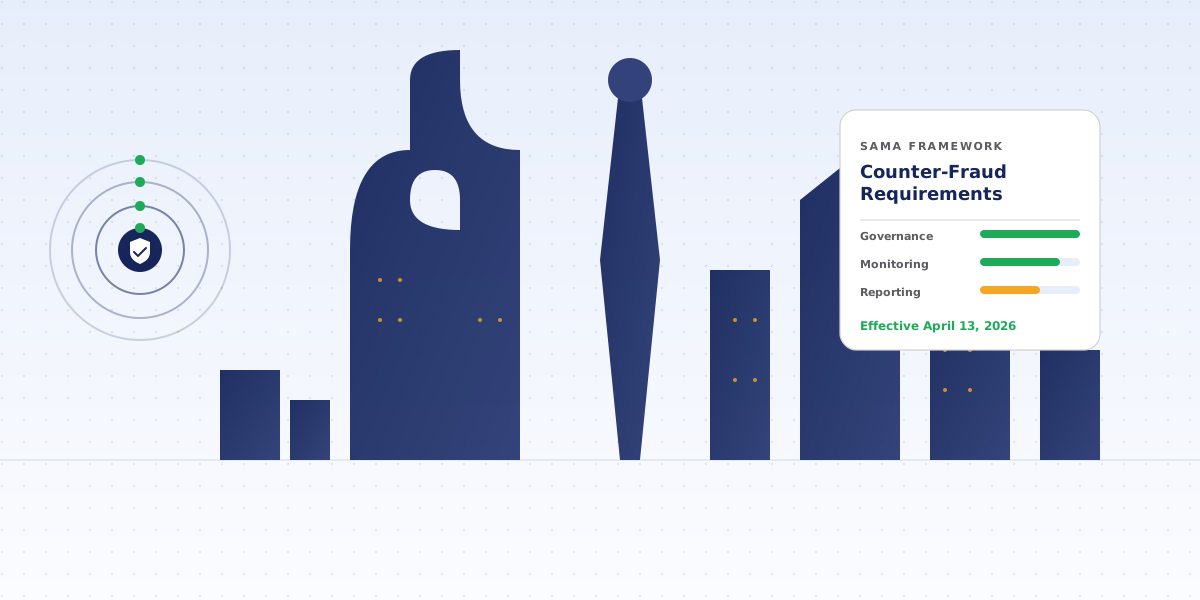
SAMA Counter-Fraud Framework Takes Effect
Read more
Industry Reports · Oct 9, 2025
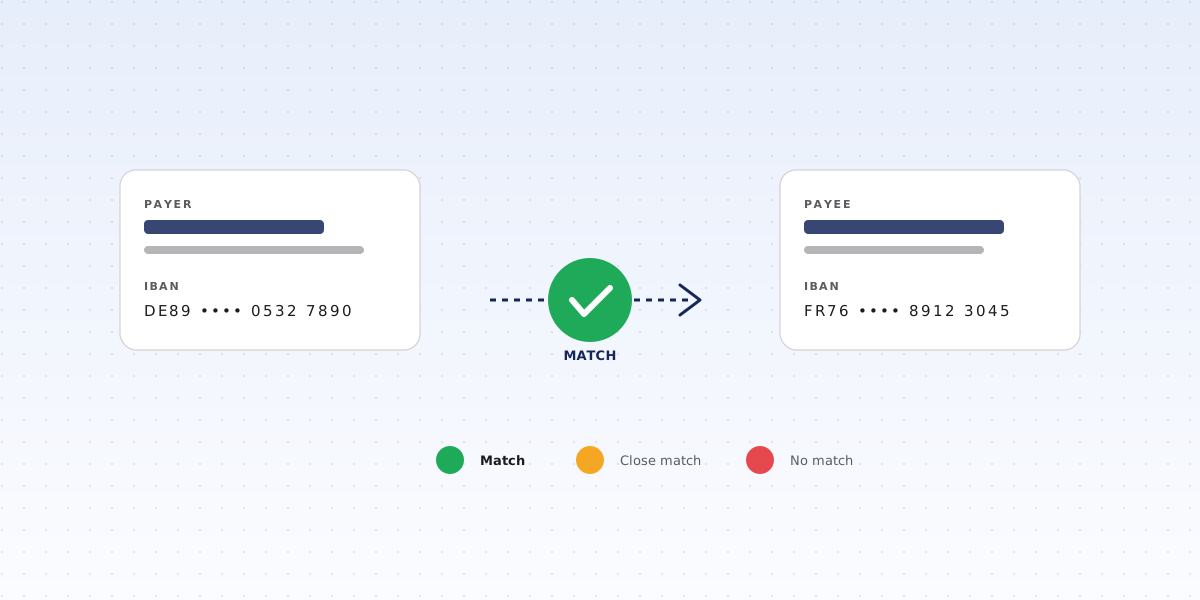
EU Verification of Payee Goes Live
Read more
Regulatory News · Mar 20, 2026
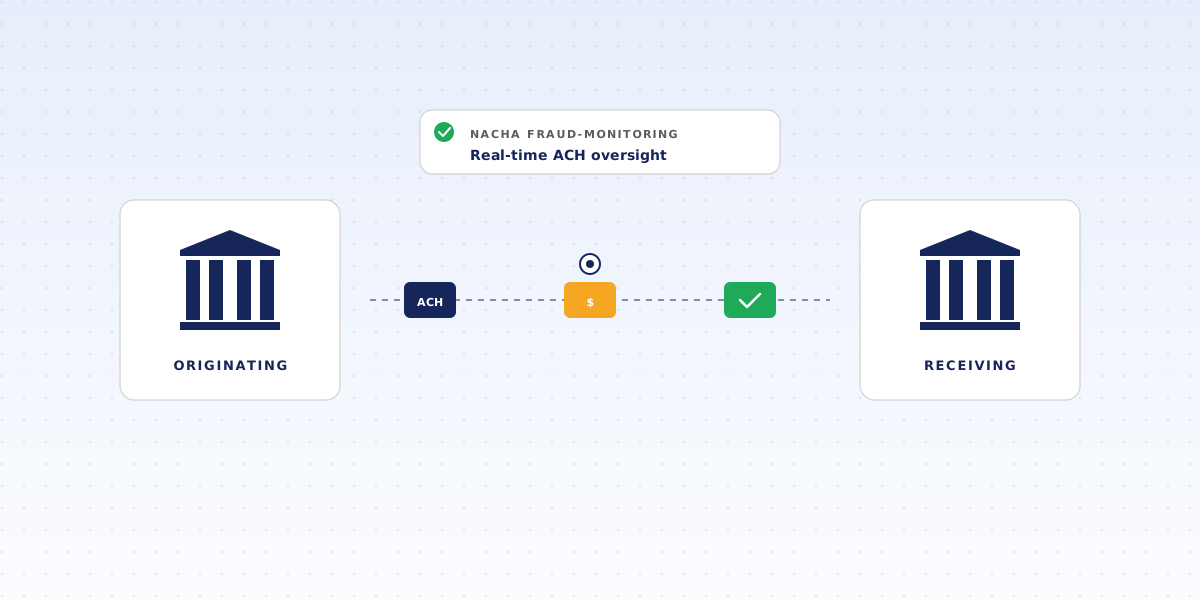
NACHA's New Fraud-Monitoring Rules
Read more

Frequently Asked Questions

No. UMCA delivers fraud decisions in under 30 milliseconds, fast enough to run inline at checkout without adding perceptible delay for shoppers.
UMCA analyzes the full transaction context — device fingerprint, location, behavioral signals, and historical patterns — to score each transaction. This contextual approach approves more legitimate shoppers while blocking fraud.
Yes. UMCA provides pre-authorization fraud scoring, real-time alerts, and automated evidence collection for dispute resolution. Coverage extends across all your payment processors.
UMCA identifies compromised accounts through login anomaly detection, session behavior analysis, and credential stuffing pattern recognition — all running in the background. Step-up authentication is triggered only when risk signals warrant it.